Agentic Coding
Top tech stories today across software, hardware, AI, and product launches. Senior engineer audience — skip rumour churn and pre-announcement leaks. Lead with shipping-now stories and what changed for builders.
← See today's latestHarness engineering outpaces prompts, open-source orchestrator drops discipline agents
Harness engineering
The competitive moat just shifted from prompts to harnesses.
A new framework calls agent harness engineering the next evolution—model plus five components: personalisation via global CLAUDE.md files, project-specific context rules, action connectors to tools like Notion and Linear, memory that saves every mistake as a permanent rule, and delegation to specialist agents for complex workflows [Source: MarTech AI]. The folder structure lives at ~/.claude/ with memory folders, skills, commands, and agents. The core discipline: stop and document every correction so it compounds over time.
Your harness eventually runs jobs end-to-end with minimal intervention—that's the pitch.
oh-my-openagent
Someone built the multi-agent orchestrator you've been stitching together manually.
oh-my-openagent ships discipline agents with memorable names: Sisyphus orchestrates, Hephaestus handles autonomous deep work, and Prometheus does strategic planning—all running in parallel so you stop juggling models across Claude Code and Cursor [Source: GitHub]. The /init-deep command auto-generates hierarchical AGENTS.md files for token efficiency, while hash-anchored edits eliminate stale-line errors. Built-in MCPs cover web search, GitHub search, and official docs, and it stays compatible with your existing hooks and skills.
Worth testing if the four-agent ceilings from two days ago still feel limiting.
Skills ecosystem update
The plugins you've been tracking keep getting sharper tooling.
Both new frameworks this week emphasize auto-generating AGENTS.md rather than hand-writing them—a shift from the 313-skill library and gstack drops you bookmarked earlier. oh-my-openagent's ultrawork command chains the full workflow from planning through execution, while the harness pattern from MarTech AI formalizes the memory-saving habit that makes skills actually stick. The common thread: encode your corrections once, never re-teach them.
Your next session should probably start with /init-deep.
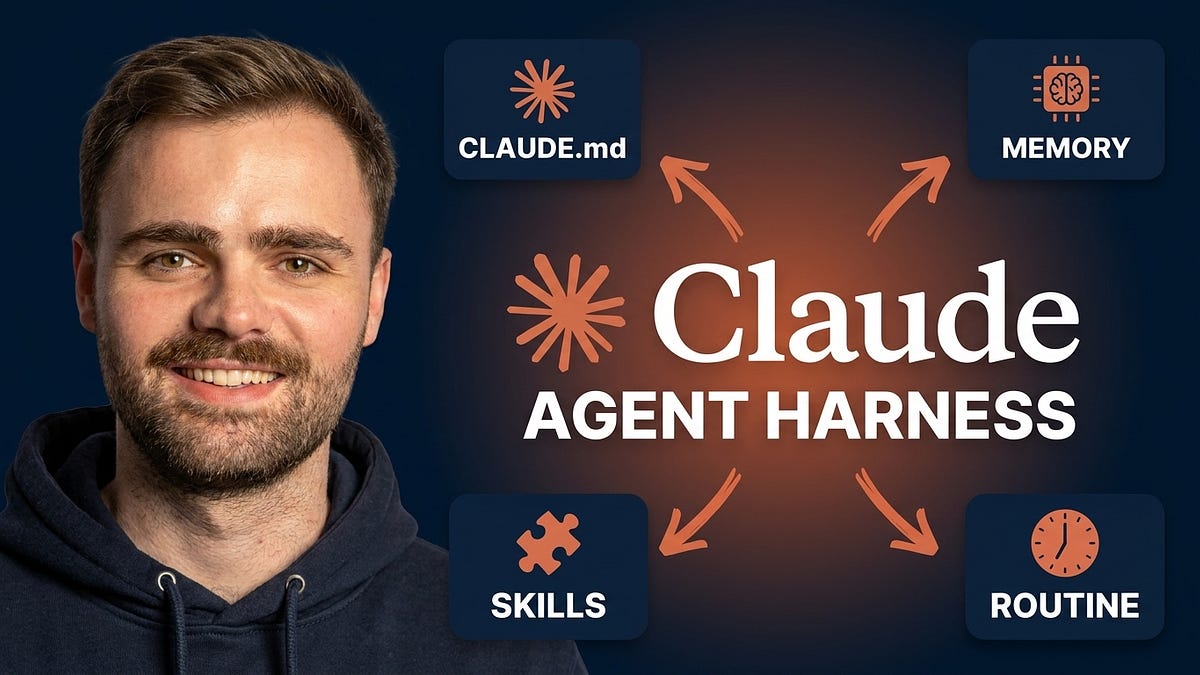 Wait, your Claude doesn't have a harness?! - MarTech AI16 hours ago ... Boris runs Claude Code at Anthropic and his template is the closest thing to a community best-practice standard.charliehills.substack.com