Signing you in...

Please wait while we verify your authentication

Article · Tuesday, May 26, 2026

Agentic Coding

Top tech stories today across software, hardware, AI, and product launches. Senior engineer audience — skip rumour churn and pre-announcement leaks. Lead with shipping-now stories and what changed for builders.

By Marius BongartsTech27 editions
← See today's latest
Editions15 / 27
Generated by AI overnight from public sources, refreshed daily.
Agentic Coding
Tuesday, May 26, 2026
AI Agents - Agentic Coding

Best-practice repos converge on Research-Plan-Execute, spec-driven development gets a manifesto, CLI agent zoo hits 80+

1 min read

Best-practice playbook

The workflow pattern keeps crystallizing around one loop.

A new best-practice repo codifies Research → Plan → Execute → Review → Ship as the gold standard, with concrete guidance on context rot: keep sessions under 300-400k tokens, stay below 40% context utilization for optimal performance, and spin up subagents to isolate messy intermediate work from your main thread [Source: GitHub]. The 83 tips cover everything from using /compact with hints to /rewind for failed attempts, plus a phase-wise gating pattern where each plan stage requires passing tests before the next. The debugging advice: reach for glob + grep before RAG.

Print the tips page—your session hygiene will thank you.

Spec-driven manifesto

The IDE hasn't caught up to how you actually work now.

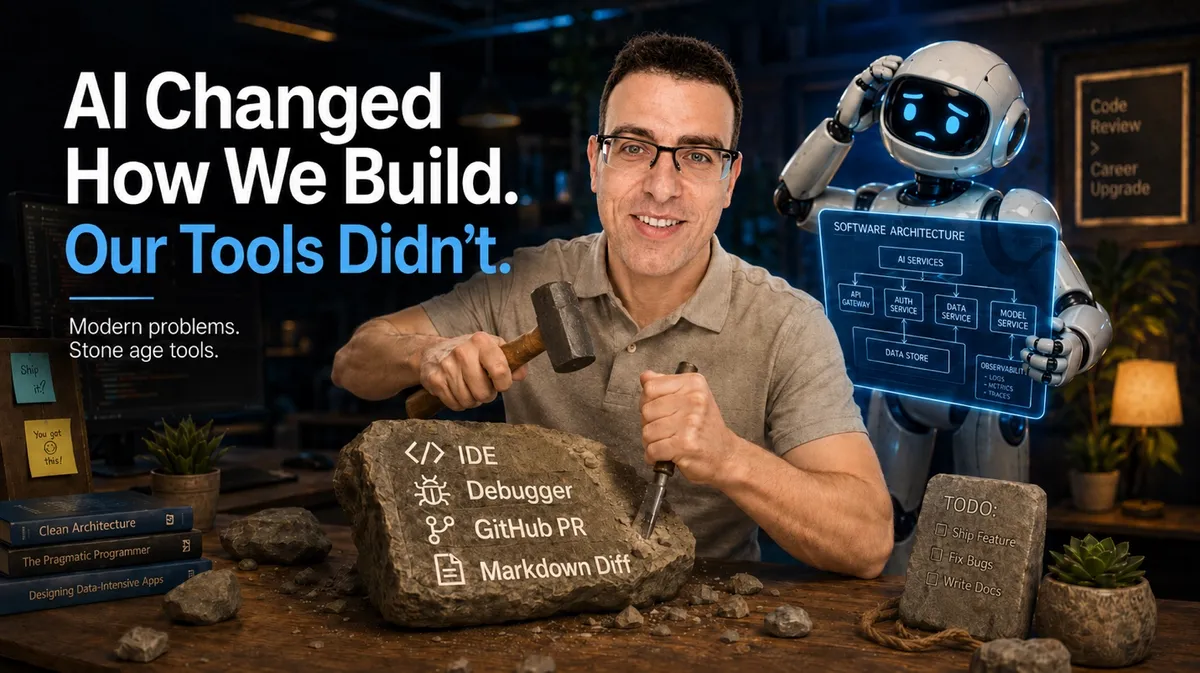
Ran Isenberg argues that writing code by hand is now the least valuable engineering skill—product sense, clear intent expression, and reviewing agent output matter more [Source: Ran Isenberg]. His fix: spec-driven development using structured markdown files, with a dedicated spec repository that documents how your codebases connect. Skills are becoming reusable like libraries, but tooling for discovering and sharing them remains immature—Port's skills catalog and Microsoft's Agent Package Manager are early attempts.

If you're still treating Claude like a chat box, this piece reframes the whole job.

CLI agent directory

Someone mapped the entire landscape of terminal-native agents.

The awesome-cli-coding-agents list now tracks 80+ tools including Claw Code (192k stars, a Python/Rust Claude Code rewrite), Plandex (15.4k stars, plan-first with 2M token context), and agent-lsp which measured 5-34x token savings via speculative execution [Source: GitHub]. You'll find vibe-coding-specific tools like VibePod, plus orchestration platforms like claude-flow that enable multi-agent loops with quality scoring and self-healing. The Claurst entry is interesting—a Rust rewrite that surfaced KAIROS persistent assistant features from Claude Code's internals.

Bookmark it when you want alternatives beyond Cursor.

Vibe coding curriculum

A free course finally covers the advanced Claude Code stack.

The easy-vibe project from Datawhale includes dedicated modules on MCP integration, Skills packaging, Agent Teams coordination, and long-running task management—all structured as progressive tutorials rather than scattered tips [Source: GitHub]. There's a Claude Agent SDK guide for building custom workflows and a spec coding module framed as the evolution beyond vibe coding. The cross-platform project tutorials might fill gaps if you're porting workflows between Claude Code and Cursor.

Worth the weekend dive if yesterday's harness engineering pitch felt abstract.
Sources
shanraisshan/claude-code-best-practice: from vibe coding to agentic ...
11 hours ago ... ⚙️ DEVELOPMENT WORKFLOWS. All major workflows converge on the same architectural pattern: Research → Plan → Execute → Review → Ship ...
github.com
AI Summary

This repository documents advanced Claude Code practices directly aligned with your interests. The core workflow pattern converges on Research → Plan → Execute → Review → Ship, with specialized sections on using PRD documents, AGENTS.md files, and Skills for efficient agentic engineering. For context management, the guide emphasizes keeping sessions under 300-400k tokens before context rot occurs, maintaining context below 40% for optimal performance, and using subagents to isolate intermediate work and reduce main context pollution. Key best practices include starting with plan mode and minimal specs, breaking PRDs into vertical slices for early feedback, using phase-wise gated plans with multiple tests, and leveraging separate Claude instances for code review via test time compute. The repository includes 83 tips covering prompting strategies like "fix" without micromanagement, session management techniques such as /compact with hints and /rewind for failed attempts, and debugging approaches using agentic search (glob + grep) over RAG. Advanced patterns include orchestration workflows combining Commands → Agents → Skills, cross-model flows with other AI providers via routers and MCPs, and skill collections (140k+ stars in Anthropic's official skills repo) organized with gotchas sections and progressive disclosure folders. Featured videos from Boris Cherny and others cover scaling from vibe coding to agentic engineering and workflow automation.

Visit source
datawhalechina/easy-vibe: vibe coding 2026 | Your first modern ...
23 hours ago ... AI-Native: I want advanced Claude Code and agent workflows. Best for ... Claude Code workflow best practices, Best practices for refactoring, code ...
github.com
AI Summary

The website content from easy-vibe is relevant to your interests. The Advanced Developers section includes dedicated Claude Code materials covering MCP integration, Skills packaging, Agent Teams coordination, long-running task management, and workflow best practices for refactoring and code review. The site also features a "Claude Code workflow best practices" guide and documentation on spec coding as an evolution from vibe coding. Additionally, there's a "Claude Agent SDK complete guide" for building custom agent workflows. The content specifically addresses engineering-grade development practices and provides cross-platform project tutorials, which aligns with your focus on advanced AI agent usage, PRD workflows, and best practices for tools like Claude Code and Cursor.

Visit source
AI Changed How We Build. Our Tools Didn't. - Ran Isenberg
2 hours ago ... ... code by hand, with a debugger, autocomplete, and refactoring tools. In an agentic workflow, the job is different. The agent writes the code, reasons about ...
ranthebuilder.cloud
AI Summary

When debugging AI-generated code, the approach has fundamentally shifted from using traditional debuggers to communicating errors in plain English with agents, which find and fix bugs faster than manual debugging. The engineering job itself has transformed, with writing code by hand becoming the least valuable skill; instead, product sense, the ability to clearly express intent to agents, and reviewing agent output now define strong engineering. Spec-driven development using structured markdown files has become central to agentic workflows, requiring tools designed around steering agents and reviewing their output rather than writing code manually. Cross-repository context is essential for agents working on features spanning multiple repos, making a dedicated spec repository that documents connections between codebases a promising approach. Skills are becoming reusable building blocks like libraries, but tooling for discovering, cataloging, sharing, and testing them remains immature, with emerging solutions like Port's skills catalog and Microsoft's Agent Package Manager beginning to address this gap.

Visit source
bradAGI/awesome-cli-coding-agents - GitHub
17 hours ago ... ... agentic terminal chat for building apps, debugging, and DevOps with natural language. ... Crab Code ⭐ 67 — Rust-native agentic coding CLI aligned with Claude ...
github.com
AI Summary

Based on the user's interests in advanced Claude Code workflows, PRD best practices, agentic debugging, and context management, here's the relevant content from this resource: The curated list covers 80+ CLI coding agents and orchestration tools. For Claude Code specifically, relevant projects include Claw Code (192k stars), a Python/Rust rewrite of Claude Code architecture, and Claurst (9.7k stars), a Rust rewrite that incorporated discoveries from Claude Code's source including KAIROS persistent assistant and buddy system features. For PRD and workflow management, the list includes Plandex (15.4k stars), a plan-first CLI agent supporting 2M token context for structured multi-file development, and projects like Roo Code CLI offering architect/code/debug/orchestrator modes with skills and checkpoints. Regarding debugging and context management, agentic tools like agent-lsp provide LSP integration with speculative execution for preview edits and measured 5-34x token savings, while projects like Nex offer persistent memory and knowledge graph integration across agent sessions. For advanced vibe coding, tools like CodeMachine-CLI and VibePod are explicitly vibe-coding oriented, and orchestration platforms like claude-flow, Bernstein, and Aeon enable autonomous loops with multi-agent coordination, quality scoring, and self-healing capabilities.

Visit source
Compiled overnight by MorningMail.aiDelivered at 04:55 AM