Agentic Coding
Top tech stories today across software, hardware, AI, and product launches. Senior engineer audience — skip rumour churn and pre-announcement leaks. Lead with shipping-now stories and what changed for builders.
← See today's latestSystem prompts decoded, skill debugging fixed, memory architecture patterns surface
Claude Code system prompts exposed
You can now read exactly what Claude Code tells itself before you type anything.
A freshly updated repository documents every system prompt, sub-agent instruction, and utility prompt Claude Code uses internally—complete with token counts for each component [Source: GitHub]. The coordinator mode prompt alone runs 3,526 tokens for orchestrating worker agents. You'll find the Plan mode subagent at 715 tokens, memory consolidation instructions, and the security monitoring prompts that govern autonomous actions. The changelog tracks 193 versions of changes.
Study these before writing your next AGENTS.md—you'll see what patterns Anthropic already baked in.
Skill debugging patterns
Most skills fail because they never trigger—not because they're broken.
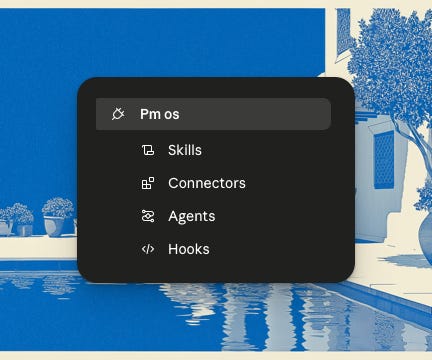
A new field guide confirms what you've probably suspected: vague descriptions and missing test evaluations kill skills before they run [Source: Substack]. The fix is writing evaluations before the skill itself, using Anthropic's updated skill-creator tool that runs separate agents for execution and grading. Keep skill bodies under 500 lines, push reference material one level deep into linked files, and use plan-validate-execute for anything risky. PM OS ships pre-tested workflows so you skip rebuilding common patterns from scratch.
Build the eval first—everything else follows.
Three-layer memory architecture
Your CLAUDE.md is only one layer of a three-tier system.
A curated skills repository surfaces the claude-code-dna project, which implements a behavioral operating system with memory architecture inspired by mem0 and GraphRAG [Source: GitHub]. You'll also find sober-coding offering 27 quality rules across seven dimensions for catching AI-native code smells, and slice-skills that transform feature ideas into validated design docs through multi-agent orchestration. The debugging patterns from obra/superpowers complement what you've been tracking.
Worth pulling these into your next session setup.
Session discipline checklist
Six setup habits separate consistent output from daily frustration.
A practical guide emphasizes creating CLAUDE.md before your second session, keeping each session focused on one bounded task, and maintaining MEMORY.md to document decisions across weeks [Source: Agent Builder]. When context gets messy, start fresh rather than correcting—the cleanup costs more than restarting. Organize documentation in /docs so Claude references files independently. Specific output format descriptions eliminate back-and-forth iterations.
These compound fast—the payoff hits by week two.
 Piebald-AI/claude-code-system-prompts - GitHub12 hours ago ... ... memory files and collapsing duplicates in the memory directory. Agent ... Claude API including tool definitions, tool choice, and best practices. Data ...github.com
 How to Create Claude Skills That Work: A Field Guide for Product ...18 hours ago ... When a skill gets bigger, you add folders next to SKILL.md . A scripts/ folder holds code Claude can run. A references/ folder holds documents Claude reads only ...nurijanian.substack.com
 GetBindu/awesome-claude-code-and-skills - GitHub17 hours ago ... Context and expertise: Domain-specific knowledge and best practices; Workflows: Step-by-step processes for complex tasks; Templates: Reusable patterns for ...github.com
 Claude Code Best Practices: What Keeps Output Consistent20 hours ago ... Every new session, Claude Code starts without memory. Without a configuration file to read, every session is the same as the first - generic, uninformed, ...agentbuilderacademy.com