Agentic Coding
Top tech stories today across software, hardware, AI, and product launches. Senior engineer audience — skip rumour churn and pre-announcement leaks. Lead with shipping-now stories and what changed for builders.
← See today's latestMulti-agent workflows get visual, async goes mainstream, subagent patterns crystallize
Multi-agent driver-navigator pattern
Test-driven development now runs itself while you watch.
A new tutorial walks through building a driver-navigator pair in Claude Code where one agent writes tests and another implements the code to pass them [Source: YouTube]. The orchestration skill handles handoffs automatically—planning, red tests, green implementation, review—without you touching the keyboard between phases. The agent definitions live in markdown files under a .cloud folder, so version control tracks everything. If you've been manually shuffling context between agents, this pattern eliminates that overhead.
Worth rebuilding your TDD loop around it.
AgentsRoom visual dashboard
You can finally see what your subagents are actually doing.
AgentsRoom ships a command-center UI that runs real Claude CLI processes across multiple sessions simultaneously [Source: AgentsRoom]. The dashboard includes 14 built-in roles—Frontend, Backend, QA, Security, Architect—with real-time visibility into streams, tool calls, and status changes. It respects your existing .claude/agents configs, hooks, and MCP servers without reinventing anything. Cross-project status aggregation means you can track dozens of agents from one screen.
The observability alone makes complex orchestration manageable.
Async background agents
Blocking is now optional.
Claude Code supports true background execution—hit Ctrl+B to spawn a sub-agent for research or analysis while you keep working in the main session [Source: ClaudeFast]. Track progress with /tasks to see status and token burn. The ClaudeFast Code Kit takes this further with /team-build, coordinating 18+ agents through dependency chains on isolated tasks. Complementary features like instant /compact, structured session memory, and /stats round out the parallel workflow story.
Turn-based coding just became batch-mode development.
Subagent context patterns
Context bloat has a fix: split it across specialists.
Subagents defined in .claude/agents/*.md run in isolated context windows, each with its own system prompt, tools, and focus [Source: AgentsRoom]. You can scope them at project level for team sharing, user level for personal reuse, or fleet level through orchestration tools. The pattern solves the biggest scaling problem—one conversation that tries to hold everything eventually forgets what matters. Role-based specialists stay sharp because they only see what they need.
Structure your agents before your context window forces you to.
 How to Use Multi-Agent Workflows in Claude Code - YouTube12 hours ago ... Learn how to build powerful multi-agent workflows in Claude Code using Skills, Subagents, and Handoffs. In this complete 2026 tutorial, you'll discover how ...youtube.com
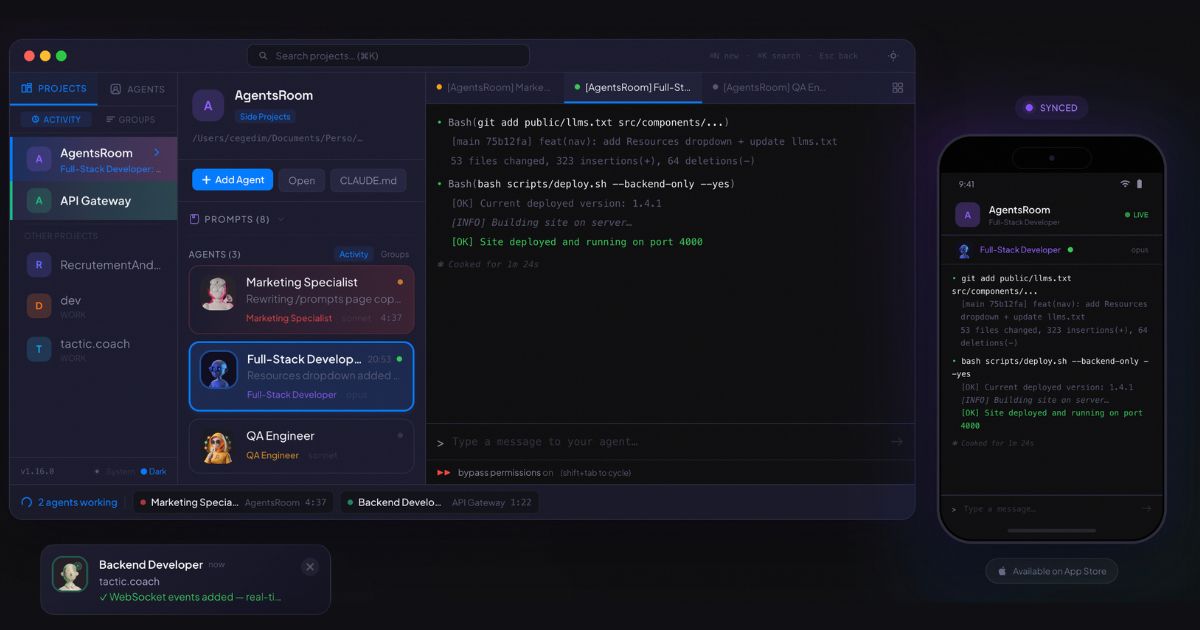 Claude Code Subagents: Visual Manager for Multi-Agent Workflows20 hours ago ... Yes. A single Claude Code session can dispatch multiple subagents that run independently. AgentsRoom adds another parallelism layer by letting you run many ...agentsroom.dev
 Claude Code Async: Background Agents & Parallel Tasks22 hours ago ... When the main agent spawns sub-agents, you can background them and keep working with Claude on other tasks. The workflow: Request: Ask Claude to handle a task ...claudefa.st